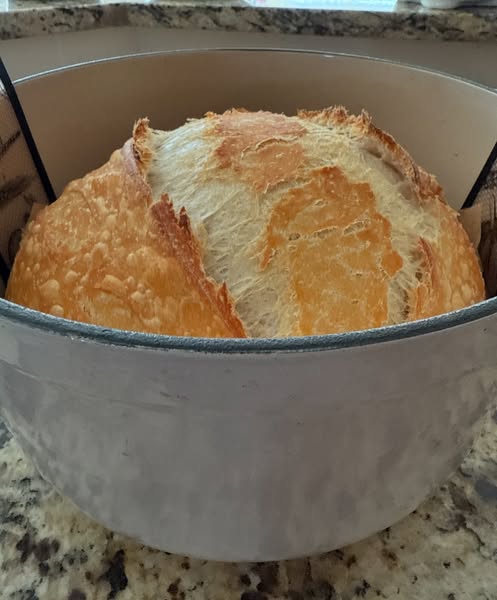
Unloaf Sourdough Bread is a rustic, free-form version of traditional sourdough that doesn’t require a loaf pan. It’s baked on a baking sheet or pizza stone to create a beautiful, round or oval shape. The result is a delicious, tangy sourdough with a crispy crust and chewy interior. Here’s a simple recipe to make your own unloaf sourdough bread:
Unloaf Sourdough Bread Recipe
Ingredients:
-
1 cup (240g) sourdough starter (100% hydration, active and bubbly)
-
1 cup (240g) water (room temperature)
-
3 cups (360g) all-purpose flour (you can use part whole wheat flour if preferred)
-
1 teaspoon salt
-
1 tablespoon honey or sugar (optional, for slight sweetness)
-
1 tablespoon olive oil (optional, for softer crust)
Instructions:
-
Prepare the Dough:
-
In a large mixing bowl, combine the sourdough starter, water, and honey (or sugar if using). Stir until well combined.
-
Add the flour and salt. Mix until the dough begins to come together, and there are no dry spots. The dough will be slightly sticky, but that’s okay.
-
-
Autolyse:
-
Let the dough rest for 20-30 minutes. This resting time (called autolyse) helps hydrate the flour and makes the dough easier to work with.
-
-
Knead the Dough:
-
After the autolyse, knead the dough for about 10 minutes on a floured surface, or until it becomes smooth and elastic. If you’re using a stand mixer, knead with the dough hook on low for about 5-7 minutes.
-
Alternatively, you can use the “stretch and fold” method. Gently pull a portion of the dough and fold it over itself, turning the dough a quarter turn after each fold. Repeat this process for 5-10 minutes until the dough feels stronger.
-
-
First Rise (Bulk Fermentation):
-
Lightly oil a bowl, then place the dough in it, turning the dough so it’s coated with oil. Cover the bowl with a damp towel or plastic wrap.
-
Let the dough rise at room temperature for about 4-6 hours or until it doubles in size. This depends on the temperature of your kitchen and the strength of your starter. Alternatively, you can refrigerate the dough overnight for a longer fermentation time.
-
-
Shape the Dough:
-
After the dough has risen, turn it out onto a lightly floured surface. Gently shape the dough into a round or oval shape, without deflating it too much.
-
For an unloaf, there’s no need to be overly precise. Just form a nice round or oval shape, like a rustic artisan boule.
-
-
Second Rise (Proofing):
-
Place the shaped dough on a piece of parchment paper, which will make it easier to transfer to the oven later.
-
Cover the dough loosely with a towel or plastic wrap and let it rise for another 1-2 hours at room temperature, or until it has visibly puffed up.
-
-
Preheat the Oven:
-
While the dough is proofing, preheat your oven to 475°F (245°C).
-
If you have a baking stone, place it in the oven while preheating. Otherwise, a baking sheet will work just fine.
-
-
Score the Dough:
-
Just before baking, use a sharp razor blade or bread lame to score the top of the dough. This helps the bread expand as it bakes and creates a beautiful, rustic look. You can make a simple X or a few slashes.
-
-
Bake the Bread:
-
If using a baking stone, carefully transfer the dough (still on the parchment paper) onto the stone in the oven. If using a baking sheet, simply place the dough onto the preheated sheet.
-
Bake for 25-35 minutes, until the bread has a golden-brown crust. You can check for doneness by tapping the bottom of the bread. If it sounds hollow, it’s ready.
-
-
Cool:
-
Let the bread cool on a wire rack for at least 30 minutes before slicing. This allows the crumb to set and prevents it from being too doughy inside.
-
Tips for Unloaf Sourdough:
-
Hydration: The hydration (amount of water relative to flour) in sourdough is important for the bread’s texture. Feel free to experiment with adding a bit more water if you’d like a slightly more open crumb, or less water for a denser loaf.
-
Baking Steam: For a crisper crust, you can add steam to the oven by placing a small pan of water on the lower rack while baking, or spritzing the inside of the oven with water just before closing the door.
-
Longer Fermentation: For more flavor and better digestibility, you can allow the dough to rise slowly in the fridge overnight (or up to 24 hours) for a longer fermentation process.
This Unloaf Sourdough Bread has a crispy, golden crust with a chewy and tangy interior. The rustic, free-form shape makes it look even more artisan and beautiful. Enjoy with butter, jam, or as an accompaniment to your favorite soups or salads!