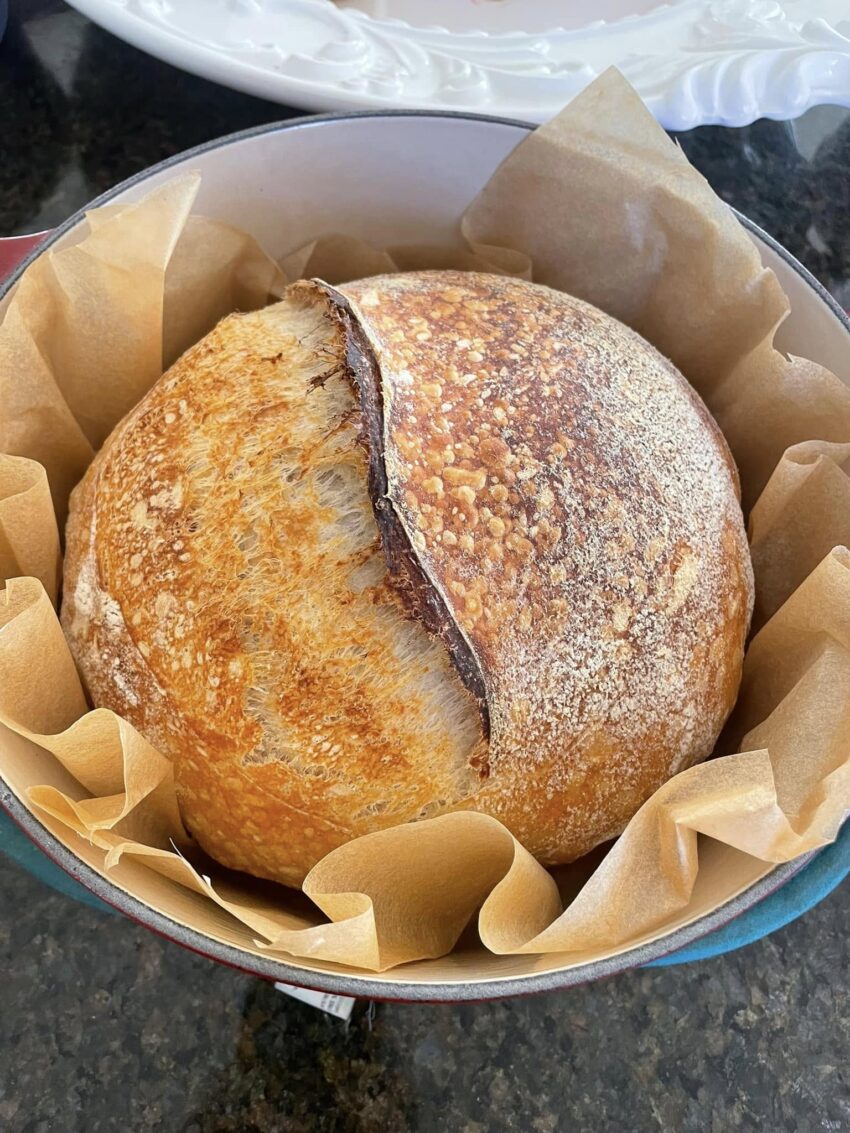
Here’s a Classic Sourdough Bread Recipe for you to make a delicious, tangy, and crusty loaf. This recipe will give you that perfect balance of chewy, airy crumb and a golden, crispy crust. It’s a relatively simple approach, but it does require patience, as the dough needs time to ferment and develop flavor.
Classic Sourdough Bread Recipe
Ingredients:
-
1 cup (240g) active sourdough starter (100% hydration)
-
1 1/2 cups (360 ml) warm water (about 85°F / 30°C)
-
4 cups (480g) all-purpose flour (or bread flour for a chewier texture)
-
1 1/2 teaspoons salt
-
1 tablespoon honey or sugar (optional, helps activate the yeast)
Instructions:
1. Feed Your Starter:
-
Make sure your sourdough starter is active and bubbly before starting. Feed it 4-6 hours before beginning the recipe to ensure it’s at its peak.
2. Mix the Dough:
-
In a large mixing bowl, combine the sourdough starter and warm water. Stir to dissolve the starter into the water.
-
Add the flour and salt. (If using honey or sugar, add it here too.) Mix with a wooden spoon or your hands until a rough dough forms. The dough will be shaggy and sticky, which is normal.
3. Autolyse (Resting the Dough):
-
Let the dough rest for 20-30 minutes. This process helps the flour absorb the water and makes the dough easier to knead, as well as improving the bread’s texture.
4. Knead the Dough:
-
After the autolyse, knead the dough for about 10 minutes on a floured surface until it becomes smooth and elastic. If you’re using a stand mixer, knead with the dough hook on low speed for 5-7 minutes.
-
Alternatively, you can use the “stretch and fold” method: every 30 minutes, stretch a corner of the dough, fold it over the middle, turn the bowl a quarter turn, and repeat. Do this for about 2 hours to build the dough’s structure.
5. First Rise (Bulk Fermentation):
-
Place the dough in a lightly oiled bowl, and cover it with a damp towel or plastic wrap. Let it rise in a warm place for 4-6 hours, or until it has doubled in size. During this time, you can do “stretch and fold” a few times to strengthen the dough.
6. Shape the Dough:
-
After the dough has doubled, gently punch it down to release the air.
-
Turn the dough out onto a lightly floured surface. Shape the dough into a round or oval loaf by folding the edges into the center and rolling it tightly.
-
For a round shape, you can place it in a proofing basket or a bowl lined with a floured towel. For an oval loaf, place it on a baking sheet or a piece of parchment paper.
7. Second Rise (Proofing):
-
Cover the shaped dough and let it rise for 1-2 hours, or until it has puffed up. You can also refrigerate it for an overnight rise (12-14 hours) for a deeper flavor.
8. Preheat the Oven:
-
Preheat your oven to 475°F (245°C) about 30 minutes before baking. Place a Dutch oven, pizza stone, or baking sheet in the oven during the preheating process to create a hot baking environment.
9. Score the Dough:
-
Just before baking, use a sharp razor blade or bread lame to score the top of the dough. This helps the bread expand during baking and creates a beautiful pattern.
10. Bake the Bread:
-
If using a Dutch oven: Carefully transfer the dough (with parchment paper, if needed) into the preheated Dutch oven. Cover with the lid and bake for 20 minutes. Then, remove the lid and bake for an additional 25-30 minutes, or until the bread is golden brown and sounds hollow when tapped on the bottom.
-
If using a baking sheet or pizza stone: Place the dough onto the preheated surface and create steam by placing a pan of water on the lower rack (optional). Bake for 30-40 minutes, or until the loaf is golden brown and has a hollow sound when tapped.
11. Cool:
-
Once the bread is done, remove it from the oven and let it cool on a wire rack for at least 30 minutes before slicing. This allows the crumb to set and prevents the bread from being too doughy.
Tips for Perfect Sourdough Bread:
-
Starter: Ensure your starter is active and bubbly before using. If it’s not active, the dough may not rise properly.
-
Hydration: Sourdough can be slightly more hydrated than other bread doughs. If the dough seems too sticky or difficult to handle, you can adjust by adding a little more flour, but be careful not to overdo it.
-
Baking Temperature: The higher oven temperature and steam during baking help achieve a crispy, crunchy crust.
-
Storage: Once completely cooled, store your sourdough bread in a paper bag, bread box, or a cloth bag at room temperature for 3-4 days. You can also freeze slices for longer storage.
Enjoy your Classic Sourdough Bread with butter, cheese, or as a perfect sandwich base! It has that signature tangy flavor and chewy texture that makes it so irresistible.